Most drivers fill the tank, check the tyres, and call it done.
Engine oil? That gets skipped until the warning light comes on. At that point, the engine has already been running short on lubrication.
Checking engine oil level takes under two minutes. No tools, no grease, no mechanical experience needed. What it does require is consistency.
This guide covers everything: how the oil level indicator works, what to do before you check, how to read the dipstick step by step, and how often your car actually needs a check.
What Is An Engine Oil Level Indicator And How Does It Work?
Your car either has a dipstick, an electronic oil level indicator, or both. Here is what each one tells you.
What Is A Dipstick?
A dipstick is a long, flat metal strip with MIN and MAX markers stamped near its lower end. It measures the exact volume of oil sitting in your engine's sump at any given moment.
How It Works:
- The strip sits inside a tube that runs down into the oil sump
- Pull it out and oil from the sump coats its lower end
- Read the level where the oil coating ends against the MIN and MAX markers
Its Limitations:
- Requires manual inspection.
- Incorrect readings can occur if the vehicle isn't on level ground or the oil hasn't settled.
What Is An Electronic Engine Oil Level Indicator?
An electronic engine oil level indicator uses sensors to measure engine oil level and displays the reading on the instrument cluster or infotainment screen. Depending on the vehicle, it may show the oil level as a bar graph, percentage, or message.
How It Works:
- A sensor monitors the engine oil level inside the oil sump.
- The information is sent to the vehicle's onboard system.
- The oil level is displayed on the instrument cluster or infotainment screen.
- Follow the procedure recommended by your vehicle manufacturer, as some systems require the engine to be switched off, while others require it to be at operating temperature.
Its Limitations:
- Not all vehicles are equipped with an electronic oil level indicator.
- The method for checking the oil level varies by manufacturer and model.
- It should not replace routine vehicle maintenance or the inspection method recommended in the owner's manual.
💡 Tip:
If the electronic indicator shows a low oil warning, always confirm with the dipstick before deciding how serious it is. Sensor faults do trigger false alerts. If both the dipstick and the indicator agree the level is low, act immediately.
Things To Do Before Checking Your Car Oil Level
Before checking engine oil level, make sure you're doing it under the right conditions. A few simple steps can help you get a more accurate reading.
Park On Level Ground
Always park your car on a flat, level surface before checking the oil. If the vehicle is parked on a slope, the engine oil can collect on one side of the oil sump, resulting in an inaccurate reading.
Let The Engine Cool
If you've just driven the car, switch off the engine and wait for about 10–15 minutes. This gives the oil enough time to drain back into the oil sump, making it easier to check the actual car oil level.
If you're checking the oil before your first drive of the day, you can inspect it straight away, as the oil has already settled.
💡 Tip:
The best time to check is first thing in the morning, before the first start of the day. The oil has had the entire night to drain back into the sump. The reading will be as accurate as it gets.
Keep A Clean Cloth Handy
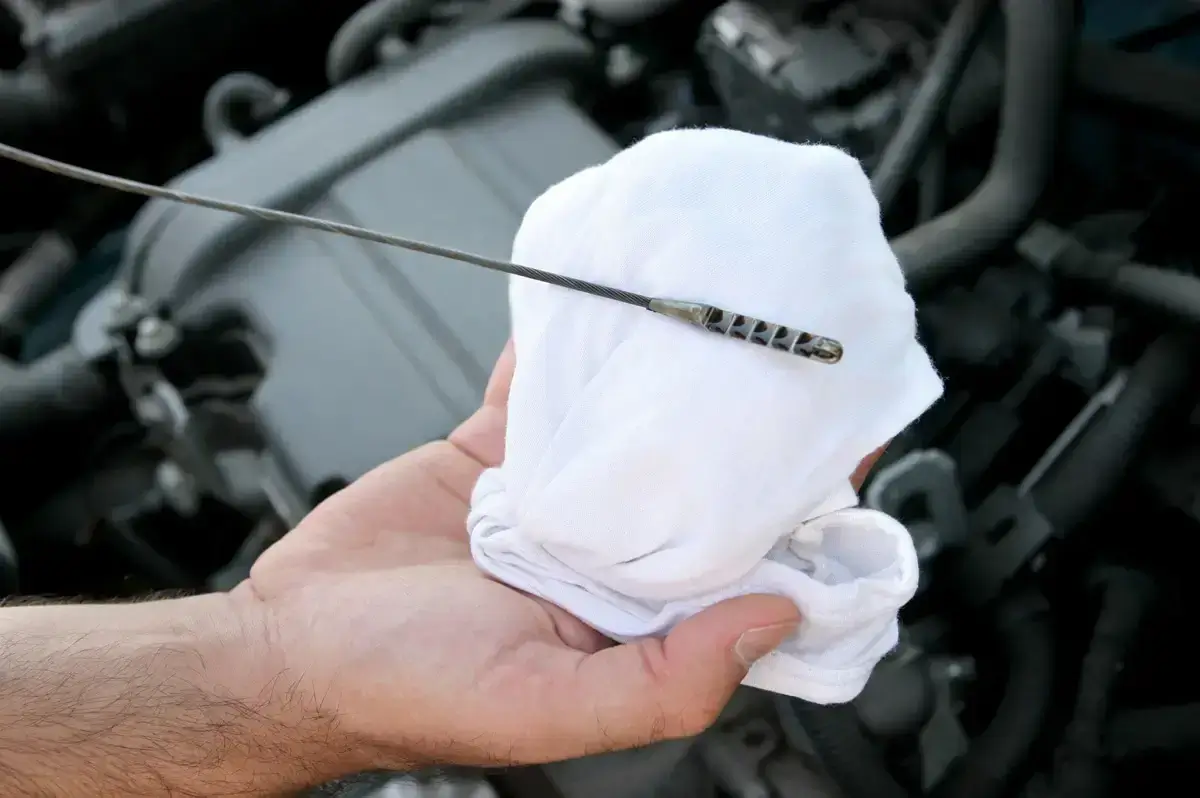
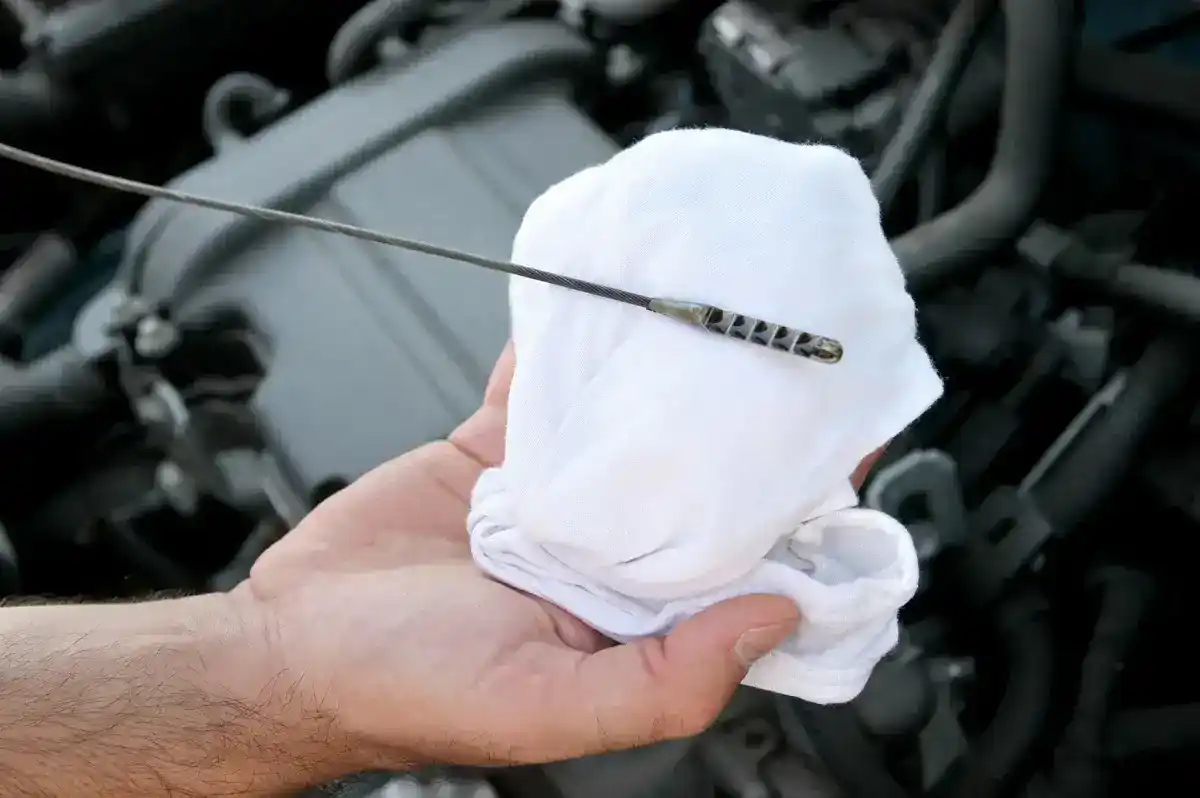
Before taking a reading, wipe the dipstick clean using a lint-free cloth or paper towel. After reinserting it fully, pull it out again to check the car oil level. A clean dipstick helps ensure a clearer and more accurate reading.
How To Read Engine Oil Level Indicator Of Your Car?
Checking your engine oil level takes only a few minutes and doesn't require any special tools. Once your vehicle is parked correctly and the oil has settled, follow these steps to get an accurate reading of your engine oil level indicator.
Step 1. Locate the Dipstick
Open the bonnet and look for a looped or T-shaped handle, usually coloured yellow or orange. The dipstick sits in a narrow tube, separate from the oil filler cap. The filler cap carries an oil can symbol on its top. If you cannot locate it, refer to your owner's manual.
Step 2. Pull The Dipstick Out And Wipe It Clean
Pull the dipstick out of the tube completely. Wipe it from top to bottom with your clean cloth. This clears oil that splashed onto the stick during the last drive and would otherwise give a falsely high reading on the next pull.
Step 3. Reinsert the Dipstick Fully
Push the dipstick all the way back into the tube until it seats completely. A partially inserted dipstick produces an inaccurate level on the next pull.
Step 4. Read The Oil Level
Remove the dipstick a second time and check where the oil sits in relation to the MIN and MAX marks. The position of the oil on the dipstick tells you whether the engine has enough oil or if it needs topping up.
Use the table below to understand what your reading means:
| Oil Level | What It Means | What To Do |
| Near MAX | Ideal level | No action needed. |
| Between MIN and MAX | Safe level | Check again after a few weeks. |
| At or Below MIN | Low oil | Top up with the recommended engine oil. |
| No Oil Visible | Critical low | Do not drive until the engine oil is topped up. |
Step 5. Top Up If Required
If the level sits below MIN:
- Locate the oil filler cap (the one with the oil can symbol, not the dipstick tube)
- Pour in 200 to 300 ml of the correct oil grade
- Wait one minute for it to settle into the sump
- Pull the dipstick out again and check the level
- Repeat until the level reads close to MAX.
Avoid filling above the MAX mark.
💡 Tip:
Not sure which oil grade your car takes? Check the owner's manual or use the Gulf Oil Finder before topping up. Adding the wrong grade is better than running critically low, but it is not a habit to build.
What The Oil On The Dipstick Is Telling You?
After reading the level, look at the oil that coats the dipstick and check its condition too.
| Oil Appearance | What It Indicates |
| Amber or light brown, transparent | Fresh and in good condition |
| Dark brown, flows smoothly | Normal ageing. Watch your service interval. |
| Black, thick, barely flows | Oil is degraded. Book an oil change soon. |
| Milky, grey, or foamy | Coolant has entered the oil. See a mechanic today. |
How Often Should You Check Your Engine Oil Level?
Checking your engine oil level takes only a few minutes, but it can help you spot low engine oil levels before they affect your engine's performance. Regular checks also make it easier to identify leaks, excessive oil consumption, or signs that your engine may need attention.
As a general rule, check your engine oil level at least once a month if you use your car regularly. You should also inspect it:
- Before a long road trip
- After driving long distances regularly
- If your vehicle has high mileage
- When the engine oil warning light comes on
- If you notice oil spots under your parked car
Don't wait for the oil pressure warning light to become your reminder. In many vehicles, it indicates that the oil pressure has already dropped below the recommended level. Regularly checking engine oil level helps you catch potential issues early and keep your engine properly lubricated.
FAQ
Park on flat ground and wait 10 to 15 minutes for the engine to cool after driving. Open the bonnet and pull out the dipstick, which usually has a yellow or orange handle. Wipe it clean with a cloth, push it back into the tube fully, then pull it out again and read where the oil mark ends. The level should sit between the MIN and MAX markers. If it is below MIN, top up with the correct grade before driving. Use the Gulf Oil Finder to confirm which grade your car takes, and repeat this check at least once a month.
When oil sits above the MAX mark, the crankshaft dips into it as it rotates. That churns the oil into aerated foam, which cannot lubricate bearing surfaces the way liquid oil does. The engine runs with reduced protection even though there is plenty of oil present. Sustained overfilling also puts pressure on oil seals and can trigger engine oil leaks. The fix is to remove the excess, either through the drain plug or by extracting it with a hand pump through the dipstick tube. Do not simply drive and expect the level to correct itself.
Cold is the more accurate condition, but a warm engine that has been sitting for 10 to 15 minutes gives a reading reliable enough for everyday use. The ideal scenario is checking before the first start of the day. The oil has had the entire night to drain fully into the sump, and the reading reflects the true level. If the engine was recently running, the 10 to 15 minute cooling window is sufficient. Never check while the engine is still running, and never check immediately after a long drive when the oil is still hot and expanded.
At minimum, once a month for any car in regular use. Check every two weeks if the car has over 80,000 km on the odometer, has a known slow leak, or if you are driving through sustained high-temperature conditions typical of Indian summers. Always check before any journey longer than 200 km. The signs of low engine oil, such as dropping oil pressure, increased engine noise, and the warning light, show up after damage has already begun. Regular monthly checks catch a drop in level before the engine reaches that point.
The checking method varies depending on your motorcycle. Some bikes use a dipstick, while others have a sight glass. Once you've checked the oil level, make sure you top up with the correct oil grade. If you're unsure which one your bike requires, read our guide on how to choose the best engine oil for your bike.
The Finish Line
The dipstick is the most reliable car oil checker in your car's engine bay. It costs nothing to use and takes two minutes.
Those three habits, done once a month, keep your engine running within the conditions it was built for. Skip them long enough and engine sludge, bearing wear, and low oil pressure become the outcome.
If the dipstick shows something you are not sure how to read, find a Gulf-authorised garage near you before the problem gets larger.
Remember: Check the level. Note the colour. Top up when needed.
Explore our car products
Lubrication
Engine Oils
Transmission
Driveline Fluids
Full Range
Other Fluids
- E-Fluids
- Greases
- Car Care

Our technical team comprises qualified engineers and lubrication specialists with decades of experience across automotive, commercial and motorsport applications. All Gulf Oil editorial content is reviewed for technical accuracy before publication.