Most people assume a parked car will start the moment they return to it. It usually does not. A car not starting after months of sitting is one of the most common car starting problems Indian drivers face after a long trip, a health situation, or a stretch of simply not needing to drive.
The car has not broken down. It has changed. The battery has been draining since the day you parked it. The engine oil has absorbed moisture. The tyres have been pressing into the same spot on the ground. The fuel has been sitting in a humid tank.
None of these are catastrophic if you catch them before you drive. This guide walks you through every system to check and exactly how to bring a parked car back safely.
Why a Parked Car Needs a Check Before You Restart It
Cars are built to move. Every aggregate, from lubrication to fuel delivery system to braking, is designed to work at operating temperature with fluids in motion.
When a car sits idle for months, each of these systems changes:
- Engine oil settles, absorbs moisture and its additives break down through oxidation.
- The battery slowly discharges.
- Tyres lose pressure and take on flat spots under the car's weight.
- Brake rotors develop surface rust in humid conditions.
- Petrol with ethanol content absorbs moisture and degrades.
In India, heat and humidity accelerate every one of these changes. A car parked during monsoon season is more affected than one parked in a cool, dry climate. Identifying what has changed before you drive keeps a routine restart from turning into a roadside breakdown.
Engine Oil: Does It Go Bad Without Driving?
Yes. Engine oil degrades over time, not just over kilometres.
When oil circulates through a running engine, it reaches temperatures that burn off water vapour, unburned fuel residue, and other contaminants. Oil that sits static in a parked engine never goes through that process. Condensation forms inside the engine from temperature swings between day and night. That moisture mixes into the oil. Over months, the additive package, which includes detergents, anti-wear agents, and oxidation inhibitors, loses its performance.
How to Check Engine Oil Before Restarting
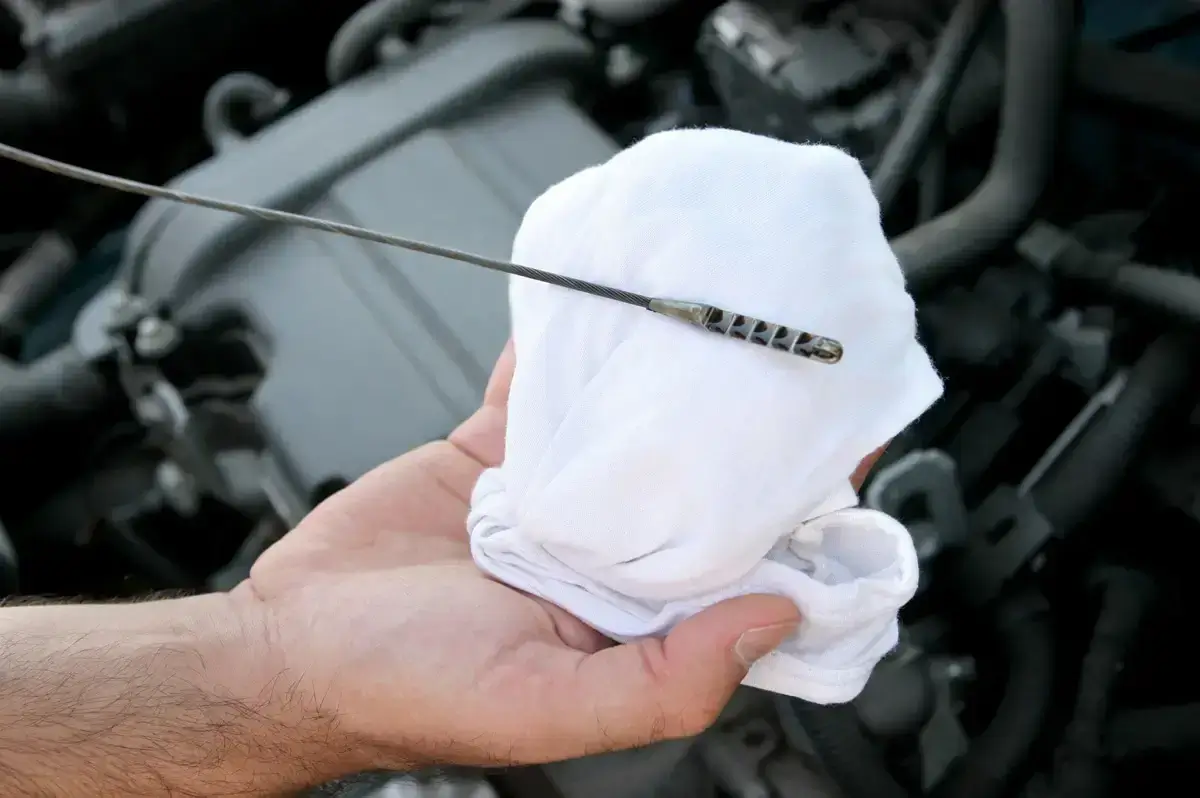
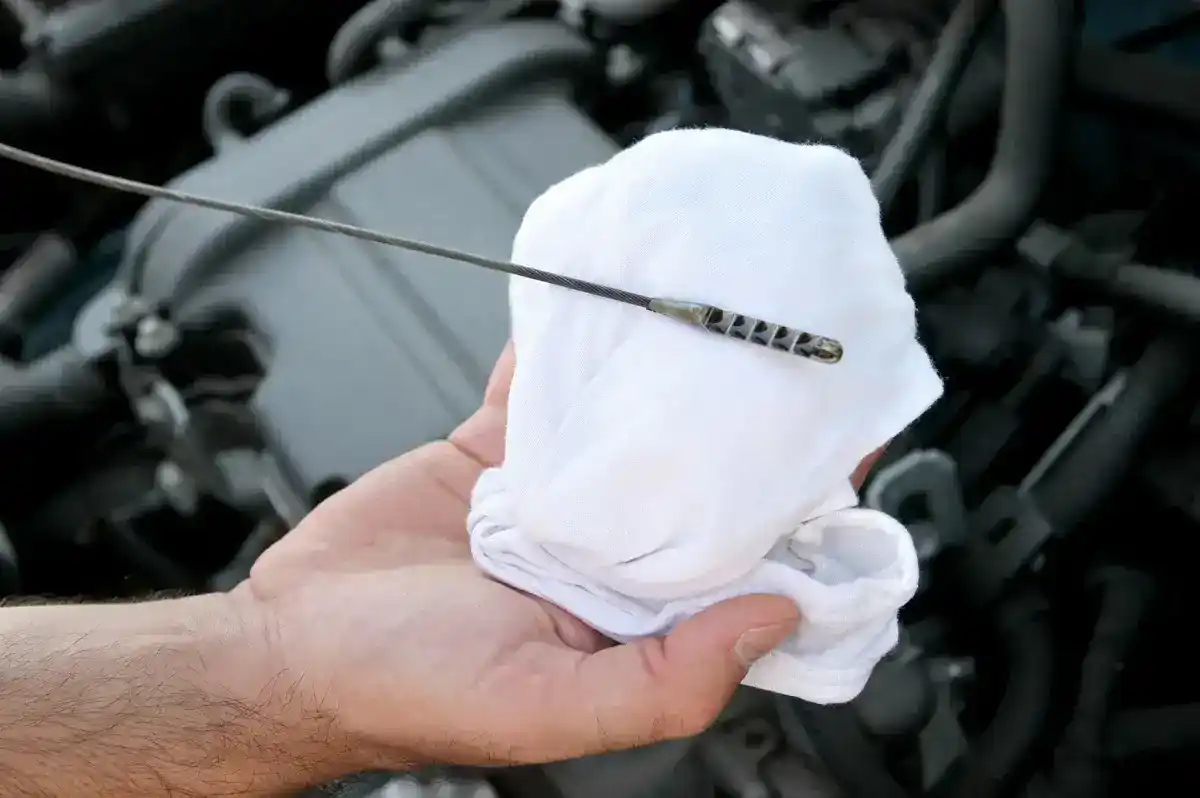
Pull the dipstick, wipe it clean, reinsert it, and pull it again. Check two things:
- Level: It should sit between the two marks on the dipstick. A significant drop without any visible leak under the car points to internal consumption.
- Condition: Smear a small drop between your thumb and forefinger. Thick, sticky oil with a strong fuel smell has degraded. A milky or foamy residue under the oil filler cap means moisture has entered the system. Do not start the engine if you see this. Take it to a service point for assessment. Change oil filter, if clogged.
When to Change the Oil on a Parked Car
| Storage Duration | Action |
| Under 3 months | Check level and appearance. Proceed if normal. |
| 3 to 6 months | Change oil and filter before extended driving. |
| Over 6 months | Change oil and filter regardless of how it looks. |
If the car was already close to its oil change interval when parked, change it before driving anywhere.
Battery: The Most Common Reason for a Car Not Starting After Storage
A dead car battery is the most frequent outcome of long-term parking. A battery loses approximately 1% of its charge per day when the vehicle is not running. In India's heat, that drain is faster. After two to three months of sitting, most batteries will not have enough charge to start the engine. Tip: Unplug the terminals if vehicle is not running for couple of months
Signs of a Dead or Weak Battery
- Dashboard lights do not come on when you turn the ignition to the first position: the battery is fully discharged.
- The engine cranks slowly or makes a clicking sound without firing: the battery has insufficient charge.
- White or blue powder on the battery terminals: corrosion is increasing electrical resistance. Clean the terminals with a damp cloth or wire brush before testing.
How to Jump Start a Dead Car Battery
Car battery jump start procedure:
- Position the working car close enough for the cables to reach but without the two cars touching.
- Connect the red (positive) cable to the dead battery's positive terminal, then to the working battery's positive terminal.
- Connect the black (negative) cable to the working battery's negative terminal, then to a bare metal surface on the car with the dead battery, not directly to the dead battery's negative terminal.
- Start the working car and let it run for two to three minutes.
- Attempt to start the car with the dead battery.
- Once started, drive for at least 30 minutes to allow the alternator to recharge the battery.
If the battery will not hold a charge after a full drive cycle, replace it. A battery repeatedly fully discharged has a significantly shortened lifespan.
Tyres: Pressure Loss and Flat Spots
Tyres change in two ways during long-term parking.
Pressure Loss
Tyres naturally lose one to two PSI per month. After three to six months of sitting, all four tyres are underinflated. Underinflated tyres increase braking distance, reduce fuel efficiency, and raise the risk of a blowout. Before moving the car even a short distance, check tyre pressure at all four corners and inflate to the figure on the sticker inside the driver's door jamb.
Flat Spots
The car's weight presses continuously into the contact patch, the part of the tyre resting on the ground. The rubber there stiffens and takes the shape of that contact area. On the first drive, you will feel a rhythmic thump or vibration from the wheels.
| Symptom | Likely Cause | Action |
| Rhythmic thump at low speed | Flat spot from storage | Drive gently; check after 15 km |
| Vibration persists beyond 20 km | Flat spot that will not resolve | Inspect sidewalls for cracking |
| Visible cracks in the sidewall | Dry rot from UV and heat exposure | Replace before highway driving |
| Tyre clearly deflated | Slow puncture or valve failure | Inflate and inspect; may need repair |
In most cases, flat spots resolve after 10 to 15 kilometres of gentle driving as the rubber warms and reshapes. Cracked sidewalls are a replacement issue.
💡 Tip:
Cars parked outdoors under direct sun in India develop tyre sidewall cracks faster due to UV exposure. Inspect all four sidewalls carefully. A tyre that looks fine from a distance can have hairline cracks that fail under load.
Brakes: Surface Rust and the Handbrake Problem
Surface rust on disc brake rotors is normal after a few days of sitting. A thin layer forms on exposed iron rotors in humid conditions. This clears off within the first few braking applications and is not a structural concern.
The more serious issue after long-term storage is the handbrake.
The Handbrake Problem
If the handbrake was applied during storage, the brake pads can fuse to the rotors through a combination of rust and sustained contact pressure. This is a known failure mode on cars parked in humid conditions.
If the handbrake is stuck and the wheels do not turn freely, do not force the car to move. Take it to a service point. Forcing a seized brake can damage the pads, rotor, and calliper.
For future long-term parking: leave the car in gear (manual) or Park (automatic) rather than relying on the handbrake.
First Braking Check
Before pulling onto a main road, test the brakes in a space. Press the pedal firmly. It should feel firm and progressive, not spongy. A soft pedal means air in the brake lines or low brake fluid. Check the brake fluid reservoir under the bonnet. The level should sit between the MIN and MAX marks.
💡 Tip:
Low brake fluid after storage can point to a slow leak in the system, not just evaporation. If the level is significantly low, have the brakes inspected before driving.
Fuel: Does Petrol Go Stale in a Parked Car?
Yes. In India, it happens faster than most drivers expect.
Indian petrol contains ethanol blends from E10 to E20. Ethanol is hygroscopic and actively absorbs moisture from the air. In India's high-humidity climate, petrol with ethanol content can begin to degrade in as little as 30 to 60 days. Degraded fuel loses combustibility, causes rough idling and misfiring, and leaves varnish deposits inside the fuel injectors and fuel system.
Signs of Degraded Fuel
- The engine cranks repeatedly but struggles to fire or stalls immediately after starting.
- The idle is rough and stuttering once the engine is running.
- A sour, stale smell comes from the fuel cap.
If the car has been sitting for more than three months with the same fuel, fill up with fresh petrol before any long-distance driving. Fresh fuel dilutes the stale petrol, and the running engine clears most residual degradation within a few hundred kilometres. If rough idling continues after a full tank of fresh fuel, have the fuel system inspected professionally.
💡 Tip:
A half-empty tank is worse than a full one. More air space above the fuel means more moisture contact. If you plan to park a car for more than a month, fill the tank before parking.
How to Restart a Car Parked for Months: Step-by-Step
Step 1: Visual inspection before touching the ignition
Walk around the car. Look for flat tyres, visible fluid leaks under the car, cracked rubber hoses under the bonnet, and any rodent damage to visible wiring. Do not start the engine until this inspection is done.
Step 2: Check engine oil
Pull the dipstick and check the level and condition. Top up if the level is low. Change the oil and filter if it appears degraded, smells strongly of fuel, or if the car has been parked for more than six months.
Step 3: Check the battery
Look for corrosion on the terminals and clean if needed. Turn the key to the first ignition position and check that the dashboard lights come on. If nothing comes on, the car battery is dead and needs a jump start or a portable charger.
Step 4: Check tyre pressure
Inflate all 4 tyres to the door jamb specification. Check the spare as well.
Step 5: Check brake fluid level
Open the brake fluid reservoir under the bonnet. Confirm the level sits between MIN and MAX. Top up with the correct DOT grade as specified in your owner's manual if needed.
Step 6: Start the engine
Turn the key or press the start button. If the engine cranks slowly, use a car battery jump-start procedure. Once running, let the engine idle for five to seven minutes before driving. This allows oil to circulate and the engine to reach operating temperature.
Listen for: rattling in the first few seconds (this usually clears as oil circulates), unusual knocking, or any warning light that stays on beyond 30 seconds. If a warning light stays on, switch the engine off and investigate before driving.
Step 7: First drive
Drive slowly for the first five to ten kilometres. Test the brakes in a clear space before joining traffic. Allow the flat-spotted tyres to warm and reshape. Keep an eye on the temperature gauge and oil pressure light throughout.
Step 8: Post-restart check
After the first 50 to 100 kilometres, check under the car for new leaks. Recheck tyre pressure, as pressure can shift after the tyres warm up. If the car was parked for more than six months, book a full service inspection.
Find a Gulf-authorised service point near you for a post-storage check.
FAQ
The two most common reasons for a car not starting after storage are a dead battery and degraded fuel. Check whether the dashboard lights come on when you turn the key. If they do not, jump-start the battery. If the engine cranks but does not fire, fill up with fresh petrol. Read our seasonal car maintenance guide for more.
Yes. Oil degrades through oxidation and moisture ingress over time, not just through mileage. If the car has been parked for more than three months, check the oil before driving. Change it if it has been parked for more than six months. Read more about how engine oil changes over time.
Connect the red cable to the dead battery's positive terminal, then to the working battery's positive terminal. Connect the black cable to the working battery's negative terminal, then to a bare metal surface on the other car. Start the working car, wait two minutes, then start your car. Drive for at least 30 minutes after starting.
Tyres lose one to two PSI per month naturally. All four will be underinflated after a few months. They may also develop flat spots that cause a thump at low speeds. This usually clears after 10 to 15 kilometres of gentle driving. Check tyre pressure and inspect the sidewalls for cracks before your first drive.
Yes. Indian petrol contains ethanol, which absorbs moisture from the air. In India's humidity, petrol can degrade in 30 to 60 days. After three or more months of storage, fill up with fresh petrol before long-distance driving. If rough idling continues after a fresh tank, have the fuel system checked. Read more in our monsoon car care guide.
For short, slow drives, yes, once you have completed the pre-start checks. Avoid highways immediately. Let the engine idle for five to seven minutes first. Test the brakes in a space before joining traffic. After the first 50 to 100 kilometres, check for new fluid leaks. Book a full service inspection if the car was parked for more than six months.
Before, if the oil is degraded or the car has been parked for more than six months. If the oil looks and smells normal and storage was under three months, restart, run the engine to temperature, and plan an oil change within the next 1,000 kilometres. Read our guide on how to change engine oil in your car.
The Finish Line
A long-parked car not starting is rarely broken. It needs someone to run through the checklist before expecting it to perform like it was driven yesterday.
Battery, oil, tyres, brakes, fuel. Five systems. Most of the checks take under ten minutes. The step-by-step restart adds another fifteen. That is less time than a roadside recovery call.
Skip the checks, and a dead battery strands you, degraded oil damages a bearing, or a seized handbrake turns a short drive into a garage job.
Explore Gulf Oil's range of car engine oils | Find a Gulf-authorised garage near you