



Engine oil doesn't stop working overnight. It gradually loses its effectiveness as it collects contaminants and is exposed to heat and friction inside the engine. Recognising these early signs can help you avoid unnecessary engine wear, maintain performance and prevent costly repairs.
In this guide, we'll cover the 5 telltale signs your engine oil needs changing, how to check your engine oil level, and more.
Why Changing Engine Oil On Time Matters
Engine oil does 4 things at once inside your engine:
- Lubricates moving metal parts so they don't grind against each other
- Cools components that the cooling system can't reach directly
- Cleans the engine by suspending contaminants and carrying them to the filter
- Protects metal surfaces from corrosion and oxidation
As oil ages, it oxidises, accumulates combustion byproducts, and absorbs moisture. The additive package that does most of this protective work gets depleted. Once that happens, the oil is still liquid. It just can't do its job properly. That's when warning signs begin to appear.
5 Signs Your Engine Oil Needs Changing
1. Engine Oil Looks Dark and Dirty
Fresh engine oil is amber in colour, transparent enough that you can almost see through it on the dipstick. As it picks up combustion byproducts, heat exposure, and wear particles, it darkens. Dark oil isn't automatically bad oil, but combined with other signs, it tells you the oil has done most of its useful work.
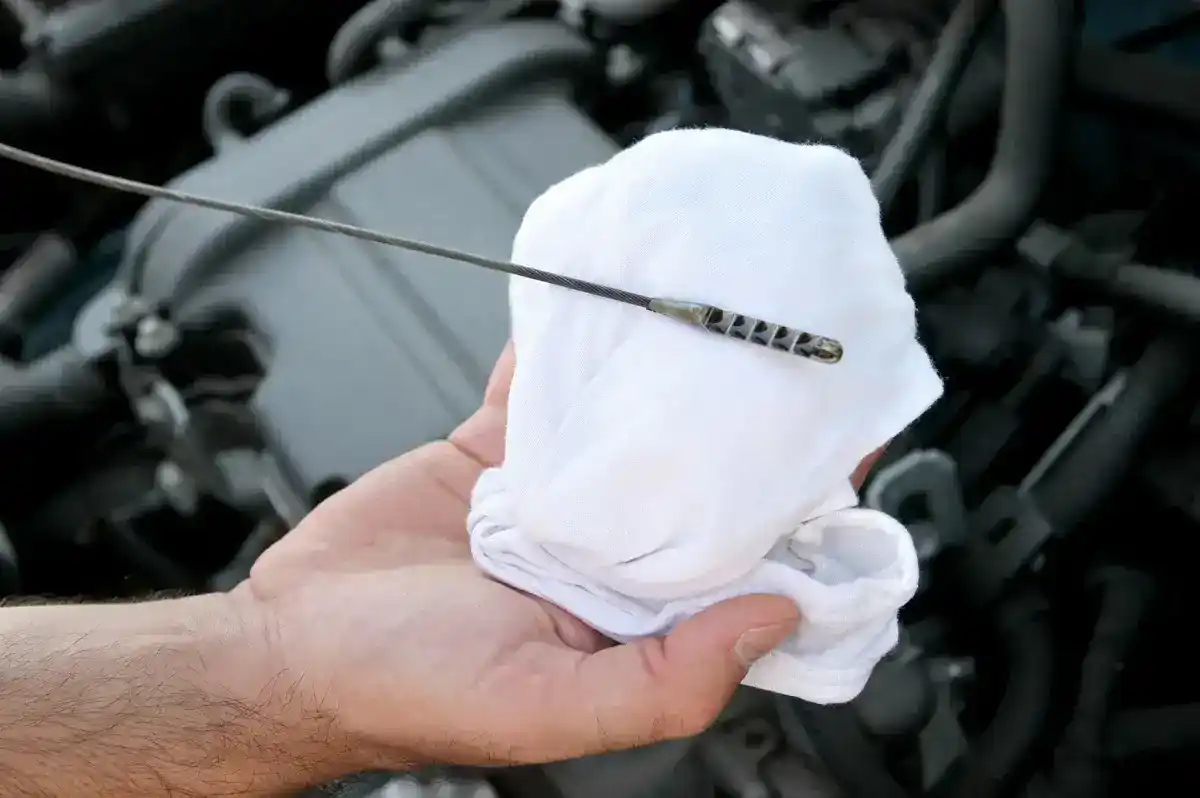
Pull the dipstick, wipe it, reinsert it, and pull it out again. Hold it up to the light and look at the colour and texture.
Engine Oil Colour Chart
Here’s a closer look at engine oil colour with this chart and what it means for your car or motorcycle.
| Oil Colour | What It Means |
|---|---|
| Amber / golden | Fresh oil, working well |
| Light brown | Normal: oil is picking up heat and contaminants |
| Dark brown | Ageing oil, approaching change time |
| Black | Heavily contaminated: change needed (note: diesel engines darken oil faster, so black alone isn't always cause for alarm) |
| Milky or creamy | Possible coolant contamination. Stop riding or driving, get this checked immediately |
One clarification worth making: oil turning black quickly doesn't automatically mean it's bad. Detergent-based oils are designed to suspend contaminants and can darken fast. What matters more is the texture. Gritty oil between your fingers means it's carrying metal particles and needs to come out.
2. Engine Oil Warning Light Comes On
The oil warning light (usually a red oil can symbol) on your dashboard means one of two things: oil pressure has dropped, or the oil level is too low. Neither situation is safe to ignore.
What it does not necessarily mean: that the oil is old and needs changing. The light is pressure-sensitive, not quality-sensitive. You could have fresh oil at a dangerously low level, or old, degraded oil at the correct level. Either way, stop and investigate.
What Is The Difference Between Oil Warning Light And Check Engine Light
| Light | What It Monitors | What to Do |
|---|---|---|
| Oil warning light (red oil can) | Oil pressure and oil level | Stop safely. Check oil level on dipstick before driving further |
| Check engine light (engine outline) | Engine management system, covering dozens of possible fault codes | Safe to drive short distances in most cases, but get it scanned |
If the oil warning light comes on while riding or driving, pull over when it's safe to do so. Check the dipstick. If the level is low, top up. If the level is fine but the light stays on, the issue is likely with oil pressure or a sensor. Take it to a workshop. Find a Gulf-authorised garage near you.
3. Engine Feels Noisier Than Usual
Fresh oil maintains a consistent film between moving metal parts. As oil breaks down and loses viscosity, that film thins. The result is increased friction. Friction is audible.
Common sounds that point to oil issues:
- Ticking or tapping from the top of the engine, often from the valve train
- Knocking from deeper in the engine, a more serious sound that can indicate bearing wear
- Rougher idle: the engine sounds less settled at standstill
A noisier engine after a cold start that settles down once the engine warms up can be normal. But if the noise persists through a warm ride, and particularly if it's getting louder over time, check the oil level and condition before putting it down to anything else.
4. Exhaust Smoke
Persistent smoke of any colour from a warm engine is a signal to stop guessing and get a professional diagnosis. Here are a couple exhaust smoke colours that might point towards an engine oil change
- Blue-tinted smoke is the most direct indicator of burning oil. It happens when oil gets past worn piston rings or valve stem seals and enters the combustion chamber. The smoke has a slightly acrid smell. If you see this consistently, not just on a cold start, the engine needs attention.
- White smoke from the exhaust is more often related to coolant entering the combustion chamber (a head gasket or coolant leak issue) rather than engine oil. However, if your oil on the dipstick looks milky or the level is rising without you adding any, that's coolant mixing with oil, which is a serious problem that needs immediate mechanical inspection.
5. Oil Level Keeps Dropping
Some oil consumption between changes is normal, especially in older engines. But if you're topping up regularly and the level keeps falling, the oil is going somewhere.
There are three primary possibilities explaining why your vehicle's oil level might be persistently dropping:
- A leak: visible externally as drips, wet patches on the engine casing, or a puddle under the vehicle
- Oil burning in the combustion chamber: usually accompanied by blue exhaust smoke
- Oil contamination: if the level appears stable but the oil looks milky, coolant is mixing with the oil, and the total volume is being masked
A falling level is not always a reason to change the oil immediately, but it is always a reason to investigate. Topping up with fresh oil while leaving degraded old oil in the system isn't a full fix. If you're frequently low, the symptoms of low engine oil can develop faster than the dipstick makes obvious.
How To Check Engine Oil Level?
To check your engine oil level, all you need is a clean rag and two minutes. Do thisPerform this check when the engine is cold or has been off for at least 10 minutes.
- Park on a flat, level surface
- Open the bonnet (car) or locate the dipstick, (often near the filler cap on a bike).
- Pull the dipstick out and wipe it completely clean with the rag
- Reinsert the dipstick fully, then pull it out again
- Read the oil level: it should sit between the MIN and MAX marks
- Check the colour and texture of the oil on the rag while you're there
- If the level is below MIN, top up with the correct grade before riding or driving further
How Often Should You Change Engine Oil?
Your engine oil change interval depends on three things: the type of oil, how you ride or drive, and what your manual says. The manual wins every time.
Here are the general ranges by oil type:
| Oil type | Typical change interval | Suits |
|---|---|---|
| Mineral | 3,000 to 5,000 km | Older engines, light daily use |
| Semi-synthetic | 5,000 to 7,500 km | Daily commuters, mixed riding and driving |
| Fully synthetic | Longer than semi-synthetic. Follow the figure in your manual. | Modern engines, high load, long runs |
Your Manual Sets The Limit
The table is a starting point. Your manufacturer tested your engine with a specific grade and a specific interval. Find it in the owner’s manual and treat it as the ceiling, not the target.
Indian Conditions Shorten The Interval
Take a Mumbai commuter who covers 8 km a day in stop-go traffic. The engine rarely reaches full temperature, and moisture and acids stay in the oil. That oil ages faster than the odometer shows.
Heat, dust and short trips do the same. Many manuals list a shorter “severe use” interval for exactly these conditions. If that sounds like your daily ride, use it.
💡 Tip:
Don’t track distance alone. Most manuals pair a km figure with a time limit. Change the oil at whichever arrives first, even if you’ve barely ridden.
Check The Signs Between Changes
Intervals are a schedule. Your engine doesn’t read schedules. If the oil looks dark and gritty, the warning light comes on, or the engine sounds rougher, change it early. Not sure which oil suits your engine? Read our guide on mineral vs synthetic oil and explore Gulf Pride 4T for bikes or Gulf’s car engine oil range.
💡 Tip:
Get into the habit of checking oil once a month. It takes less time than filling a water bottle, and it gives you early warning on every issue covered in this guide, before any of them become expensive.
Tips to Make Engine Oil Last Longer
- Use the correct viscosity grade. Running the wrong grade stresses the additive package faster. Check your manual.
- Use quality oil. Oil that meets or exceeds your OEM's API rating holds up better under heat and load. Explore Gulf Pride 4T engine oils for bikes or Gulf's car engine oil range for your vehicle type.
- Change the oil filter every time you change the oil. An old filter holding contaminated oil defeats the purpose of fresh oil in the system.
- Avoid repeated short trips. Short cold-start trips prevent the engine from reaching full operating temperature. Moisture and acids that form during combustion don't burn off. They stay in the oil and degrade it faster.
- Check the level regularly. Catching a slow drop early prevents the engine from running critically low between changes.
- Don't ignore warning lights. The oil pressure light in particular is not a "check at your next convenience" signal. It means the engine is under stress right now.
Read more on common dashboard warning lights!
FAQ
The oil warning light (a red oil can icon) is a pressure sensor, not a quality sensor. When it comes on, it means oil pressure in the system has dropped below a safe threshold, or the oil level is critically low. Pull over safely and check the dipstick before driving further. The check engine light (an engine outline icon) covers a wide range of fault codes managed by the engine control unit, from a loose fuel cap to a misfiring cylinder.
It doesn't specifically signal an oil issue. A check engine light is generally safe for short-distance driving, but it needs a diagnostic scan. An oil warning light is not safe to ignore even for a few minutes.
Yes, significantly. Stop-go city traffic means the engine operates at low speeds under high load, generating more heat per kilometre than highway driving. Short trips prevent the engine from reaching full operating temperature, so moisture and acids produced during combustion don't burn off. They stay in the oil. Frequent cold starts also add stress.
All of these factors deplete the oil's additive package faster than the km count suggests. If most of your riding or driving is urban, treat your oil change interval as time-based rather than distance-based and check the dipstick at least once a month.
No. The oil warning light means oil pressure has dropped to a level where the engine is not being adequately lubricated. Continuing to ride or drive risks accelerated wear on bearings, camshafts, and pistons. This is damage that cannot be fixed by an oil change. Pull over safely, switch off the engine, and check the oil level on the dipstick. If it's low, top up with the correct grade and check whether the light clears.
If the level is fine but the light stays on, do not restart the vehicle. Get it transported to a workshop for diagnosis. Find a Gulf-authorised service garage near you.
The Finish Line
Engine oil gives plenty of warning before it reaches the point where it can no longer protect your engine. By checking the oil level regularly and paying attention to changes in its colour, smell and your vehicle's performance, you can spot potential issues early.
Combined with timely oil changes using the manufacturer-recommended engine oil, these simple checks can help keep your engine running smoothly and reduce the risk of costly repairs.
Explore Gulf Oil engine oils for bikes and cars | Find a Gulf-authorised garage near you


